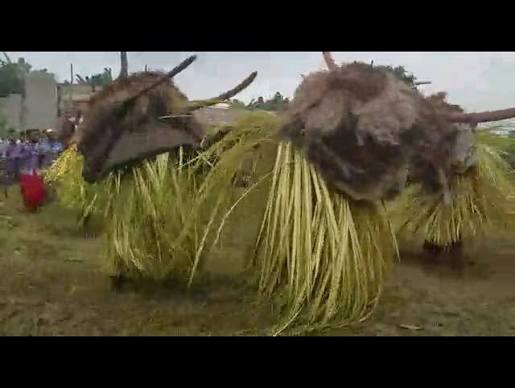
This is arguably the most prestigious and sacred secret society music and dance of the Bakweri people. Dancers wear heavy grass-skirt costumes and masks representing elephants to portray strength, unity, and an intimate tie to the forest. It is typically accompanied by the deep pounding of heavy drums.
The term "Elephant Dance" generally refers to two distinct cultural traditions globally. In Cameroon, the Malle (Maalé) Society of the Bakweri/Kpwe people performs a sacred elephant dance known as Veambe. In Myanmar, the traditional Kyaukse Elephant Dance features colorful, man-made costumes honoring Buddhist history. [1, 2, 3, 4, 5]
The Malle Society (Bakweri Elephant Dance)
In the shadow of Mount Cameroon, the Bakweri people practice a powerful cultural tradition centered around the Malle Society. [1]
The Dance: Known as Veambe or the Elephant Dance, it features intense performances where dancers mimic the movements and force of the animal, often furiously striking their tusks into the ground. [, 2]
Spiritual Bond: The elephant is revered by the Malle society, with members believing in a spiritual connection with the animals. [1]
Charms & Juju: Initiated performers are believed to use secret protections or charms (juju), with highest-ranking dancers reputed to have feats of immunity. [1]
Malé (The Elephant Dance) - Fako Dallas Association | Fako Dallas Association